How science competitions build critical thinking
Every parent wants their child to grow into a confident, capable thinker. Someone who can weigh evidence, ask the right questions, and solve problems with creativity and calm. These are the hallmarks of critical thinking, and they don’t develop overnight. Instead, they’re built through purposeful challenge, and that’s exactly what science competitions like ICAS are designed to provide.
Science competitions give students something the everyday classroom routine can’t always offer: a meaningful reason to stretch their thinking beyond the familiar. When students take part in a well-designed science test, they encounter questions that ask them to apply what they know in new and unexpected ways. That process of pausing, reasoning and working through something genuinely challenging is where critical thinking comes to life.
Why critical thinking matters from Years 2 to 12
Critical thinking isn’t a skill reserved for older students or the academically gifted. It’s something every child can develop at every stage of their learning journey. For younger students in Years 2 to 4, it starts with curiosity: noticing patterns, asking “why?” and learning to look beyond the obvious answer.
As students move through primary school and into secondary, critical thinking deepens into the ability to evaluate information, construct reasoned arguments and make sound decisions. These are skills that become increasingly important in a world full of complexity and rapid change.
Building these skills early gives children a real advantage. Students who practise higher-order thinking, including analysis, evaluation and creative problem-solving, tend to approach their studies with greater confidence. They’re better equipped to tackle unfamiliar problems, manage academic pressure and engage more deeply with what they’re learning. A well-structured science test is one of the most effective ways to nurture these capabilities.
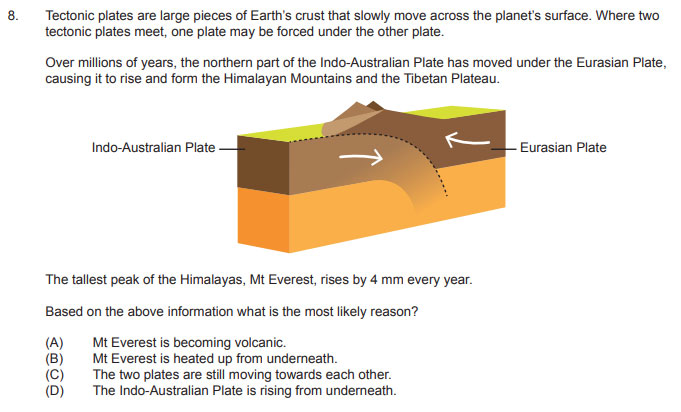
A science question from one of our ICAS past papers
How science competitions build stronger thinkers
The best science competitions go well beyond testing recall. They draw on a range of interconnected scientific skills that mirror how real scientists think and work. These typically include observing and measuring — learning to notice details and gather information carefully — as well as interpreting data, where students make sense of what they’ve observed. Students also practise predicting and concluding, using evidence to form reasoned judgements, and investigating, which encourages them to ask questions and design ways to find answers. Underpinning all of this is reasoning and problem solving: the ability to think logically, weigh up possibilities and work through complex challenges step by step.
Competitions like the ICAS Science assessment are crafted by education experts and experienced teachers specifically to push students beyond the day-to-day application of the curriculum.
This is challenge with purpose. When a student works through a science test question that requires them to interpret a graph, evaluate a hypothesis or think through a cause-and-effect chain, they’re doing more than answering a question. They’re practising the exact thinking skills that will serve them across every subject and far beyond the classroom.
Well-designed science competitions are also age-appropriate and engaging, so students feel motivated rather than overwhelmed. They give students an opportunity to discover what they’re capable of when they aim high and have a go.
A foundation for higher education and careers
The critical thinking skills that science competitions develop don’t stay on the page. Universities consistently identify analytical reasoning and problem-solving as among the most important capabilities for success in higher education, regardless of the field of study. Whether a student goes on to study medicine, engineering, law, the arts or business, the ability to think clearly under pressure and evaluate evidence objectively is fundamental.
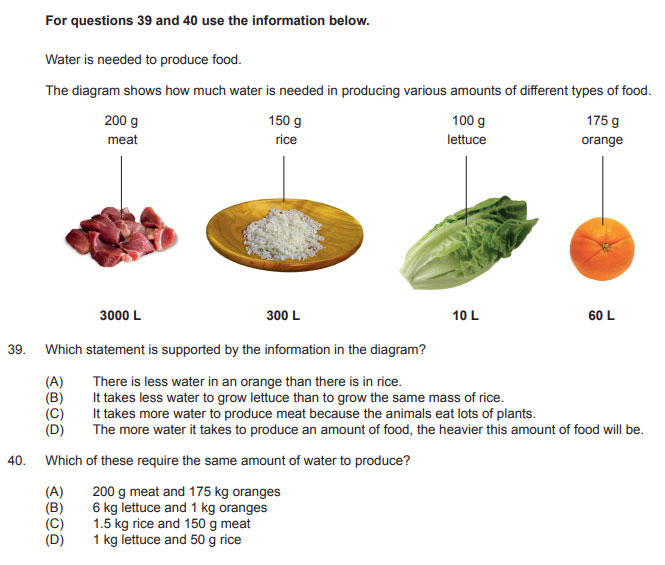
A science question from one of our ICAS past papers
In the workplace, the picture is much the same. Employers across every industry value people who can think independently, solve problems creatively and communicate their reasoning with confidence. The scientific skills students build through competition — from careful observation and interpretation through to structured reasoning — are precisely the capabilities that translate into real-world success. These are not niche skills – they’re the foundations of adaptability and lifelong learning. By encouraging your child to take part in a meaningful academic challenge now, you’re helping them build capabilities that matter for their futures.
Confidence built through challenge
One of the most powerful things about taking part in a science competition is the sense of accomplishment students feel. It’s not just about achieving a high score. It’s about having the courage to take on something genuinely challenging. When students receive recognition for their effort and dedication, it tells them that their hard work matters, that growth comes from stretching themselves and that there’s real pride in trying their best.
For parents, it’s a chance to celebrate your child’s willingness to step up and take on a meaningful academic challenge they can feel proud of.
Give your child the opportunity to grow
Science competitions offer more than a test. They offer a positive, purposeful experience that builds confidence, rewards effort and develops the thinking skills children need to thrive. From learning to observe the world more carefully to reasoning through problems with confidence, these are skills that grow with your child at every stage.
Whether your child takes part through their school or you register them independently, entering a science competition is a wonderful way to support their growth and show them what they can achieve when they challenge themselves.