• Assessments portal
  • Results login
    • Schools
    • Parents
  • Support
    • Schools
    • Parents
    • Locked-down browser
    • Device setup
    • Webinars
  • Contact
  • Assessments portal
  • Results login
    • Schools
    • Parents
  • Support
    • Schools
    • Parents
    • Locked-down browser
    • Device setup
    • Webinars
  • Contact
ICAS Assessments
  • For schools
    • Why host ICAS
    • Reporting & insights
    • What’s involved
    • Entry fees
    • Achievement levels
    • Grants
    • Celebration
  • For parents
    • Why participate
    • Achievement levels
    • Understanding results
    • How to prepare
    • Entry fees
    • Scholarships
    • How to participate
  • Dates
  • Subjects & year levels
    • Subjects
    • Year levels & exam papers
  • About
    • About ICAS
    • Success stories
    • Blog
  • For schools
    • Why host ICAS
    • Reporting & insights
    • What’s involved
    • Entry fees
    • Achievement levels
    • Grants
    • Celebration
  • For parents
    • Why participate
    • Achievement levels
    • Understanding results
    • How to prepare
    • Entry fees
    • Scholarships
    • How to participate
  • Dates
  • Subjects & year levels
    • Subjects
    • Year levels & exam papers
  • About
    • About ICAS
    • Success stories
    • Blog
Buy past papers
Enter ICAS 2026
Buy 3 past papers, get 1 FREE (T&Cs apply). Hurry, ends soon! Buy now 

How does Reach grading work?

new reach reports

Reach assessments allow schools to accurately measure student progress year on year, and compare their performance to nationwide benchmarks.

If your school is using Reach for this purpose, or you’re considering using the assessments in future, you may be wondering how the grading system works. In this article, we’ll explain how Reach tests are scored, and how those scores translate into grades for students.

Reach grading and scoring

How Reach scores work

As with ICAS, Reach tests are composed of questions that have binary “correct” or “incorrect” answers. When the test is completed, the student’s final score is summed up and turned into a graded percentage (more below).

How Reach grading works

Unlike ICAS grading, which is based on comparative percentages, Reach grades are provided based on each students’ final “raw” score. That means they are not comparative, so the performance of others does not have any effect on each student’s final grade.

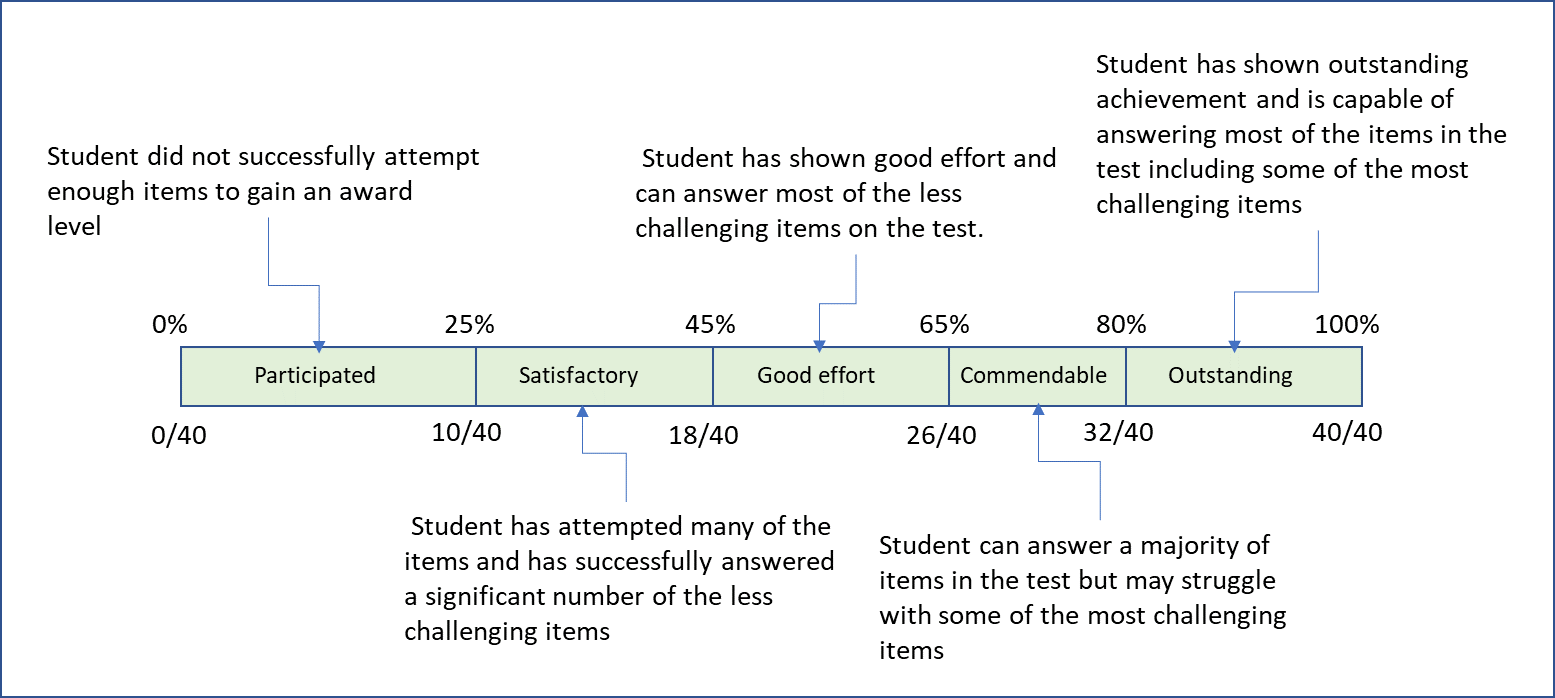
Reach grading is calculated using five achievement bands, based on these approximate percentages:

  • 0 to <25% = participated
  • ≥25% to <45% = satisfactory
  • ≥45% to <65% = good effort
  • ≥65% to <80% = commendable
  • ≥80% to <100% = outstanding

You can see these bands laid out in the below graphic:
Reach assessment grading scale

The boundaries between these bands vary for each year level and subject, but they are always derived from the percentage of questions answered correctly. 20 out of 40 questions answered correctly will always provide a 50% score/grade, unlike ICAS, where the grade changes depending on how others performed.

What do Reach results mean?

Reach results include a variety of pre-made reports that allow you to measure student performance, and their growth over time. So the meaning will change depending on the report you’re looking at.

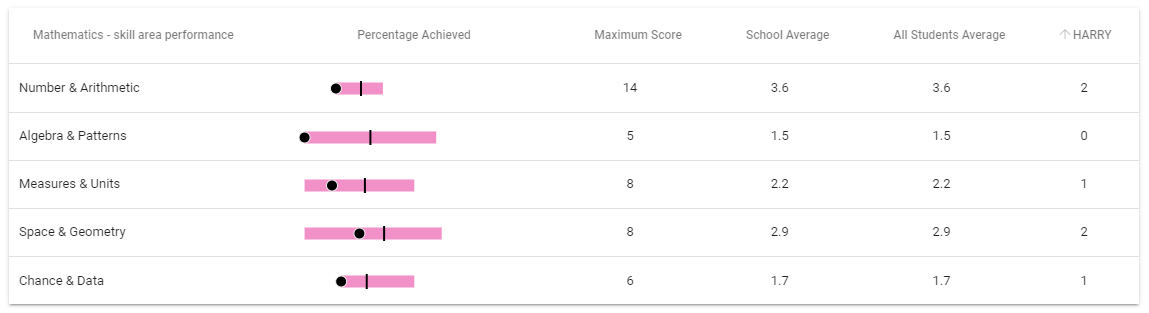
For example, in the “Raw Score Results & Bands” report you can see the exact marks for every student for their Reach tests, as well as the bands (test score distribution) they fall under. By drilling into specific year levels you’ll find performance for specific sub-skills (like text comprehension for English), how students answered each question, performance for individual students, and much more. The reports are designed to give you the exact information you need to assess performance for your school, from year levels and cohorts to individual students.
Reach score report skill areas
Student performance by subject skill area

To learn more about what Reach results mean, check out our video here.

    Previous post

    Essential literacy and numeracy skills for students
    June 4, 2024

    Next post

    How does ICAS grading work?
    June 4, 2024

    You may also like

    kids-doing-science-competition
    How science competitions build critical thinking

    March 24, 2026
    dungog primary
    How an ICAS grant helped Maitland–Newcastle challenge its brightest learners
    March 10, 2026
    boy practising for icas writing
    5 practical tips on how to be successful at ICAS Writing
    March 28, 2025

    Search

    Our products

    ICAS
    Reach
    ICAS assessments logo

    The fun, competitive and inspiring challenge for bright, young minds.

    ACN 081 897 494

    Assessments portal

    Results
    Schools
    Parents

    Support
    Schools
    Parents
    Locked-down browser
    Device setup
    System status updates

    Testing centres

    Reach

    Data-led Education Equity Program (DEEP)

    Terms & Conditions
    Refund Policy

    Get ICAS updates

    Contact

    Email us

    Australia toll-free: 1800 931 775

    New Zealand toll-free: 0800 440 904

    International: +61 2 5565 2217

    Facebook Linkedin Youtube
    Supported by The University of Sydney
    ICAS assessments logo

    World-class assessments
    driving student success.

    ACN 081 897 494

    For schools
    Why host ICAS?
    Reporting & insights
    What’s involved
    Entry fees
    Achievement levels
    Grants

    For parents
    Why participate?
    Achievement levels
    Understanding results
    How to prepare
    Entry fees
    Scholarships
    How to participate

    Dates

    Subjects

    Year levels & exam papers

    Testing centres

    Reach


    Assessments portal

    Results
    Schools
    Parents & students

    Support
    Schools
    Parents & students
    Locked-down browser
    Technical support

    About
    About ICAS
    Our team
    Success stories
    Blog
    Data-led Education Equity Program

    Terms & Conditions

    Refund Policy


    Contact us

    Email us

    Australia toll-free: 1800 931 775

    New Zealand toll-free: 0800 440 904

    International: +61 2 5565 2217

    Facebook Linkedin Youtube
    Supported by The University of Sydney
    Janison
    Janison assessments logos

    © ICAS Assessments. Powered by Janison. All rights reserved.

    About Janison | Privacy Policy | Terms of Use | Refund Policy

    • For schools
      • Why host ICAS
      • Reporting & insights
      • What’s involved
      • Entry fees
      • Achievement levels
      • Grants
      • Celebration
    • For parents
      • Why participate
      • Achievement levels
      • Understanding results
      • How to prepare
      • Entry fees
      • Scholarships
      • How to participate
    • Dates
    • Subjects & year levels
      • Subjects
      • Year levels & exam papers
    • About
      • About ICAS
      • Success stories
      • Blog
    Buy past papers
    Enter ICAS 2026
    • Assessments portal
    • Results login
      • Schools
      • Parents
    • Support
      • Schools
      • Parents
      • Locked-down browser
      • Device setup
      • Webinars
    • Contact